
Digging up a sidewalk in New York City takes more than a crew and a permit. Before any concrete comes out, you need a free 811 call so Con Edison and other utilities can mark their lines, a NYC DOT permit for the opening, and a separate NYC DEP permit if water or sewer lines are involved. Skip one step and the job stalls, or worse, someone hits a gas main.
Here is how the pieces fit together and the order that keeps a project moving.
Who Controls What Under the Sidewalk
Three players matter most. NYC DOT issues permits for anything that disturbs a street or sidewalk, and its Highway Inspection and Quality Assurance (HIQA) unit inspects the work. Con Edison owns the gas, electric, and steam lines under the pavement. DEP handles water mains and sewers, along with the service lines that connect them to buildings.
DOT also referees between them. Its Street Works Manual calls advance notice one of the most effective ways to cut down on excavations, and DOT hosts borough-level utility coordination meetings to share upcoming resurfacing schedules. Contractors can check the same planned work in DOTMap before they ever apply.
Start With New York 811
State rule 16 NYCRR Part 753 requires anyone digging to contact New York 811 at least two working days, and no more than ten, before starting. The call is free. Utilities then have two working days to mark their facilities with paint or flags. Con Edison says even small jobs, like setting a mailbox post, need the call.
Learn the color code before you touch the ground, since DOT publishes it:
• Red marks electric lines and yellow marks gas, oil, and steam.
• Orange marks communications, blue marks drinking water, and green marks sewer and drain lines.
• White outlines the area you plan to dig.
Marks show approximate locations, not exact ones. The tolerance zone extends half the line’s diameter plus two feet on each side, and hand tools are required inside it until the exact position is verified. Under the state code, gas and petroleum lines must be confirmed with hand-dug test holes before powered equipment goes in. If the start date slips more than ten working days past the marking, request new marks.
Get the Right DOT Permit
Sidewalk work runs on two permit families. A Sidewalk Construction Permit (the 04 series) covers repairs, replacements, and new sidewalks. A Street Opening Permit (the 01 series) covers excavation that disturbs the street surface, which is what utilities and licensed plumbers usually pull. DOT’s sidewalk page lists the sidewalk permit at $70 per 300 linear feet, and the manual says no permit is needed for work under 25 square feet unless you are clearing a violation.
Who applies depends on who is working. Homeowners doing their own repair can apply by mail with a notarized Affidavit of Ownership. If you hire a contractor, that contractor must be registered with DOT and apply online through NYCStreets. The manual notes that most complete online requests are approved within one to two business days.
A few things can slow you down:
Protected streets. A street stays protected for five years after resurfacing, and an application to start work within 18 months of that date lands on an automatic review hold.
Vaults. If the sidewalk is the roof of a vault, a DOB-approved restoration plan must accompany the application, and the City will not repair sidewalks over vaults.
Embargoes. DOT suspends permits for major events and the winter holidays. The holiday embargo typically runs from mid-November through January 2, and requests to work through it carry an extra $135 review fee with no promise of approval.
Pedestrian space. You must keep five feet of sidewalk clear or get a separate Occupancy of Sidewalk permit.
Where DEP Comes In
If a water or sewer line is affected, the manual says you need a DEP permit before applying for the street permit. The reverse also holds. DEP’s permit rules make any permit that opens a street or sidewalk contingent on DOT approval, so the two agencies effectively move together.
Permits involving plumbing work go only to Licensed Master Plumbers, who file through DEP’s online PARIS system. A new sewer connection starts with a sewer certification from a licensed engineer or registered architect, followed by the connection permit. Water service work follows separate standards: a licensed plumber installs the connection, DEP inspects it, and a DEP inspector witnesses the pressure test. Backfill around and one foot above the connection must be clean earth free of stones.
Lead service lines get stricter treatment. DEP states that repairs are not permitted on them, and a relay is required. In an emergency, a plumber can open the street under an emergency DOT permit, but relays still need a DEP permit.
Working Around Con Edison Equipment
Con Edison marks the approximate location of its gas, electric, and steam facilities, and warns that even a small scratch or dent can create a hazard. If you strike gas, call 911 and Con Edison at 1-800-75-CONED, and never rely on smell alone to detect a leak.
Vaults need extra care. Transformer vaults are typically installed, owned, and maintained by the electric utility under master consent agreements with the City. For building vaults, DOT requires 600 PSF live loads on sidewalk doors, gratings, and covers, and any vault work needs a DOT permit and usually DOB approval. Covers and gratings also face a maximum slope of 1 inch in 5 feet.
Restoration, Inspection, and Who Pays
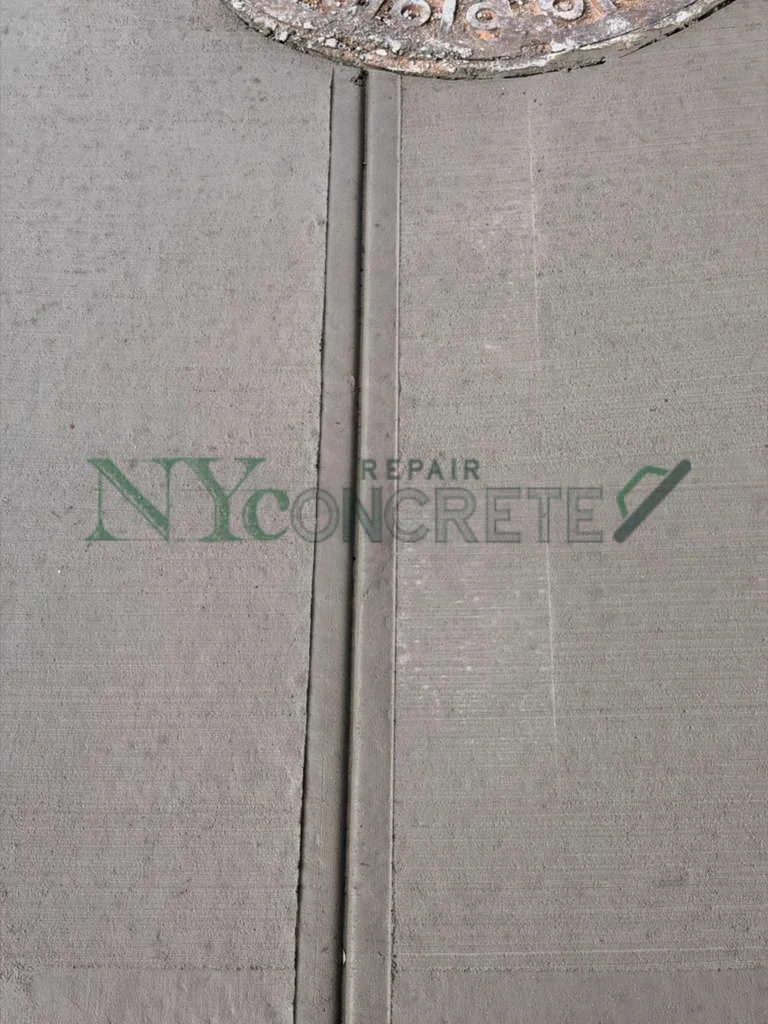
Once the trench is closed, the sidewalk has to go back to spec. Under DOT rules, expansion joints go in every 20 feet, flags should be 5 by 5 feet where feasible, and defective flags must be replaced whole, because patching individual flags is not permitted. Sidewalks must pitch toward the curb at between 1 and 3 inches per 5 feet.
Permittees also guarantee their restoration for three years, or up to five on protected streets. HIQA inspectors can issue Corrective Action Requests that must be fixed within 30 days, and Notices of Violation carry fines.
Sidewalk ownership is a separate matter. Under Administrative Code 19-152, owners maintain the sidewalk in front of their property. A DOT violation carries no fine and gives 75 days to repair, after which the City can do the work and bill the owner. If a utility or contractor caused the damage, DOT tells owners to document it, look up the permit in NYCStreets, and file a claim with that company.
A Sequence That Keeps Projects Moving
1. Check DOTMap and the protected streets list for planned city work.
2. Call 811 and wait for every mark or an all clear.
3. Line up DEP permits through your plumber if water or sewer is affected.
4. Apply for DOT permits, plus DOB approval if a vault is involved.
5. Hand dig in tolerance zones and keep five feet of walkway open.
6. Restore to spec, then schedule inspections and any violation dismissal through 311.
Let Experts Handle the Coordination
Between 811 tickets, DOT holds, DEP paperwork, and Con Edison inspections, one missed detail can cost weeks. NYC Conrete Repair can help with permits, utility coordination, and sidewalk restoration so your project stays on schedule. Contact us today to request a free estimate and schedule a consultation with our licensed and trusted experts.